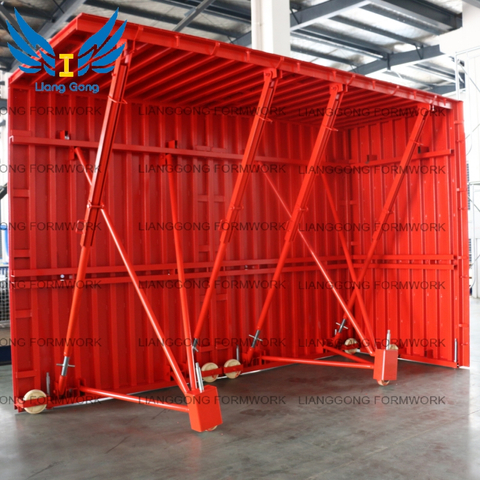
Standard steel formwork is built around repeatable panel sizes, familiar connections, and efficient configuration for common walls, columns, slabs, or structural elements. Customized Steel Formwork is developed around the geometry, interfaces, and production rhythm of a particular project. Neither choice is automatically superior. A standard system can reduce design and procurement complexity, while a custom solution can remove the fillers, improvised adjustments, and inconsistent outcomes that occur when an unusual shape is forced into a generic panel grid.
Key Takeaways
Standard systems are strongest where dimensions and repetition suit the existing module range.
Customized Steel Formwork is justified by special shapes, repeat production, tight interfaces, or project-specific tolerances.
Compare the full lifecycle, including layout design, transport, assembly, maintenance, storage, and reuse.
A custom design should begin with complete drawings and clear responsibility for approvals.
When standard formwork is the better fit
The Steel Frame Formwork range provides a practical starting point for regular walls and columns. Standard panels can speed planning where the project has repeated bays, straight runs, accessible corners, and tolerances that suit the available sizes. The same system can often handle reasonable variation through corners, fillers, ties, and accessories.
Standardization becomes less attractive when it creates too many non-standard fillers, excessive joints, repeated site alterations, or difficult stripping around penetrations. The apparent low purchase price can then be outweighed by labour, finish correction, and lost time.
When Customized Steel Formwork earns its complexity
The Customized Steel Mould range is intended for project requirements that do not fit ordinary panels well. Examples may include special-section columns, curved or tapered elements, shafts, repeat precast profiles, tunnel-related shapes, or interfaces with embedded items. The requirement is not simply “custom size.” It is a defined geometry, intended repetition, and a formwork concept that can be manufactured, assembled, released, and maintained responsibly.
Comparison point
Standard steel formwork
Customized Steel Formwork
Starting point
Existing modular inventory
Approved project drawings and special geometry
Commercial advantage
Lower design effort for regular layouts
Less adaptation where unusual work repeats
Main risk
Too many fillers or compromises
Incomplete drawings or underused bespoke tooling
Best evaluation
Panel utilization and site speed
Repeat quantity, tolerances, and lifecycle use
Compare total cost, not only fabrication cost
Use this plain-text formula: total ownership cost = design and fabrication + transport + site assembly + cleaning and repair + storage + residual reuse value. A custom mould can be a sound decision if it prevents repeated site modification or supports a substantial repetition quantity. Conversely, it can be poor value if it is used once for a shape that a standard system could form acceptably with a modest layout adjustment.
Ask the supplier to identify all interfaces: concrete-contact face, lifting points, tie or clamp locations, bracing, access, release sequence, and cleaning areas. Confirm whether changes after fabrication will be costly or disruptive. For a project with regular slab zones but specialized vertical elements, an Aluminum Frame Formwork option may be evaluated separately for suitable wall or column areas rather than forcing one material across every task.
Procurement questions that prevent rework
What concrete element and exact geometry will the formwork create?
How many repetitions justify dedicated tooling?
What dimensional and surface-finish tolerances are required?
How will the formwork be lifted, braced, stripped, cleaned, and stored?
Can parts be reused on a subsequent project, or is the design truly single-purpose?
Where the project includes vertical cores and repetitive levels, align the decision with the high-rise building formwork solution. The most efficient custom tool can still create delays if it conflicts with lifting, access, or the broader construction sequence.
Conclusion
Choose standard steel formwork when the project fits a modular system with few compromises. Choose Customized Steel Formwork when the geometry, repetition, and interface requirements make a purpose-built solution more controllable than repeated site adaptation. Lianggong Formwork offers both modular steel-formwork categories and customized steel moulds. The decisive evidence should be drawings, repeat count, logistics, and the whole cost of forming the concrete element.
FAQs
What is Customized Steel Formwork?
It is steel formwork designed around specific project geometry, connections, tolerances, or repeat-production requirements.
Is custom formwork only for curved concrete?
No. It can also suit special shafts, columns, openings, embedded interfaces, and repeat elements that do not fit a standard module efficiently.
Can standard panels be modified on site?
Only within the approved system and project controls. Unapproved modification can affect fit, safety, and concrete finish.
How many reuses justify a custom solution?
There is no fixed number. Compare the repeat quantity with design, fabrication, handling, repair, and residual-use value.
What information should a supplier receive?
Provide current drawings, concrete element details, repeat quantities, tolerances, pour sequence, lifting limits, and required approval process.

 한국어
한국어 Tiếng Việt
 Bahasa Melayu
 Filipino
 Bahasa Indonesia
 العربية
 Français
 Русский
 Español
 Português
 English
 Deutsch
 italiano
 日本語
日本語 Nederlands
 ไทย
ไทย Polski
 Türkçe
 አማርኛ
አማርኛ ພາສາລາວ
 ភាសាខ្មែរ
 ဗမာစာ
ဗမာစာ தமிழ்
தமிழ் magyar
 Română
 Čeština
 Монгол
 қазақ
қазақ Српски
 हिन्दी
 فارسی
فارسی Kiswahili
 Slovenčina
 Slovenščina
 Norsk
Norsk Svenska
 українська
 Ελληνικά
 Suomi
Suomi Հայերեն
 עברית
עברית Latine
 Dansk
Dansk اردو
اردو Shqip
Shqip বাংলা
বাংলা Hrvatski
 Afrikaans
 Gaeilge
 Eesti keel
 Māori
Māori नेपाली
 latviešu
 অসমীয়া
 Беларуская мова
 Български
 डोग्रिड ने दी
 Esperanto
 Eʋegbe
 íslenska
 Türkmençe