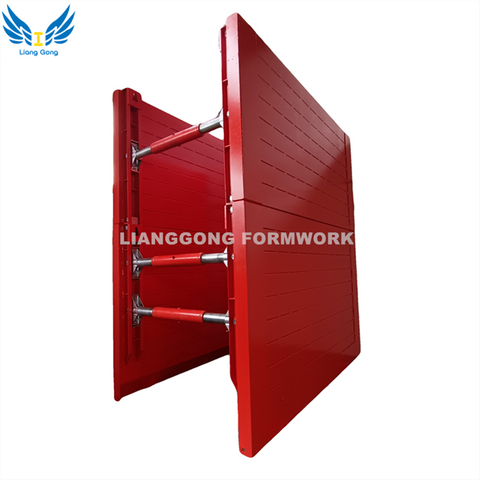
Sourcing Customized Steel Formwork is a technical purchasing exercise, not a price-only comparison. Two quotations can describe “custom steel moulds” while covering very different scopes: one may include a detailed layout and lifting concept, while another may exclude critical corners, accessories, checking gauges, or site documentation. Buyers should compare the concrete element to be formed, the supplier’s interpretation of the drawings, the material and connection details offered, the verification process, and the work required after delivery.
Key Takeaways
Make every quotation respond to the same drawing package and commercial scope.
Separate the price of the mould from engineering, accessories, packing, transport, spares, and support.
Check inspection points before fabrication—not only after delivery.
Evaluate reuse and changeability alongside first-use cost.
Start with a controlled technical brief
The Customized Steel Mould product range covers steel mould categories used to hold concrete while it sets. For a buyer, the essential first step is to issue controlled drawings with revisions, tolerances, concrete-face requirements, embedded items, openings, and intended cycle quantity. A supplier cannot responsibly quote a custom tool from a rough visual alone.
The brief should also state the intended handling method, maximum lifting capacity, storage constraints, target project location, and acceptance process. This turns a generic quotation into a comparable technical offer.
Compare the quotation line by line
Comparison item
What to ask
Why it matters
Design scope
Which drawings and revisions are included?
Prevents a mismatch between price and geometry
Contact face
What finish and joint treatment are proposed?
Affects concrete appearance and cleaning
Connections
Which ties, clamps, pins, bolts, or walers are included?
Determines assembly completeness
Handling
Where are lifting points and bracing provisions?
Influences site logistics and safe use
Inspection
What dimensional checks occur before shipment?
Identifies errors before the tool reaches site
Compare a customized offer with the Steel Frame Formwork catalogue only where the geometry might genuinely be handled by standard panels. This is a useful benchmark for understanding whether customization solves a real fit problem or merely adds cost to a conventional layout.
Verify manufacturing and inspection evidence
Buyers should request a clear pre-production confirmation of geometry, component list, interfaces, and acceptance criteria. During fabrication, agreed hold points can cover principal dimensions, squareness, connection alignment, weld appearance where relevant, concrete-contact-face condition, and trial assembly. The precise inspection method should be set by the project drawings and applicable requirements rather than by generic marketing claims.
For special columns or repeated vertical elements, studying the Timber Column Formwork category can clarify whether a different system family would meet the construction purpose more simply. The point is not to substitute materials automatically; it is to avoid buying bespoke steel when the form, reuse plan, and finish requirement do not justify it.
Evaluate delivery as a system handover
A custom tool is not ready for use merely because fabricated steel has arrived. Confirm packing lists, component identification, drawings, assembly instructions, connection hardware, spare consumables, lifting information, and the procedure for reporting a mismatch. If shipment is phased, identify which parts are needed for the first workable assembly.
Use total ownership cost = quotation price + design-change cost + site assembly cost + repair and cleaning + transport and storage + value of future reuse. This comparison helps buyers distinguish a low initial price from a complete, usable system.
The project also needs to coordinate the custom mould with surrounding temporary works. On high-rise work, refer to the high-rise building solution while developing the lifting, access, and cycle plan. A specialized mould should improve the sequence, not introduce a new bottleneck.
Conclusion
The best custom steel-formwork quotation is the one that makes the scope transparent. Buyers should compare geometry, connections, finish, inspection, logistics, documentation, and lifecycle use—not a headline unit price. Lianggong Formwork presents customized steel moulds alongside standard formwork families, allowing buyers to test whether the project truly needs a bespoke tool. A disciplined technical brief and a common comparison sheet are the foundation of a sound sourcing decision.
FAQs
What documents are needed to quote Customized Steel Formwork?
Provide current drawings, revisions, tolerances, concrete element details, embedments, quantities, lifting restrictions, and the intended construction cycle.
What should a custom-formwork inspection include?
The agreed checks should cover the project’s critical dimensions, fit-up, connection alignment, concrete-contact face, and trial assembly where appropriate.
Is the lowest quotation normally the best value?
Not necessarily. It may exclude engineering, accessories, inspections, packing, or other components needed for a complete system.
Can a custom mould be reused?
Its future reuse depends on the geometry, condition, cleaning and repair process, storage, and whether another project needs the same form.
Why compare a standard system too?
It helps determine whether the project requires bespoke geometry or could be completed efficiently with a modular system.

 한국어
한국어 Tiếng Việt
 Bahasa Melayu
 Filipino
 Bahasa Indonesia
 العربية
 Français
 Русский
 Español
 Português
 English
 Deutsch
 italiano
 日本語
日本語 Nederlands
 ไทย
ไทย Polski
 Türkçe
 አማርኛ
አማርኛ ພາສາລາວ
 ភាសាខ្មែរ
 ဗမာစာ
ဗမာစာ தமிழ்
தமிழ் magyar
 Română
 Čeština
 Монгол
 қазақ
қазақ Српски
 हिन्दी
 فارسی
فارسی Kiswahili
 Slovenčina
 Slovenščina
 Norsk
Norsk Svenska
 українська
 Ελληνικά
 Suomi
Suomi Հայերեն
 עברית
עברית Latine
 Dansk
Dansk اردو
اردو Shqip
Shqip বাংলা
বাংলা Hrvatski
 Afrikaans
 Gaeilge
 Eesti keel
 Māori
Māori नेपाली
 latviešu
 অসমীয়া
 Беларуская мова
 Български
 डोग्रिड ने दी
 Esperanto
 Eʋegbe
 íslenska
 Türkmençe