Column construction rarely follows a single, fixed dimension from foundation to roof. Basement levels, transfer podiums, and upper structures often require columns with different cross-sections, heights, and reinforcement densities. When every size change demands a new set of custom steel molds, costs rise quickly and schedules slow down. This is exactly where H20 Timber Beam Formwork becomes highly relevant for modern projects. In this article, we focus specifically on H20 timber beam column formwork and explain what “adjustable” really means in practice, how the system is adjusted on site, how far that adjustment can go, and whether flexibility affects load capacity or concrete finish quality. By understanding these points, project teams can judge whether one adjustable system can realistically serve multiple column sizes without compromising performance.
What “Adjustable” Should Mean for Column Formwork
In construction marketing, “adjustable” is often used as a vague promise. On site, however, adjustability must translate into measurable, repeatable advantages that directly affect productivity and quality.
Size Range Coverage Beyond Simple Flexibility
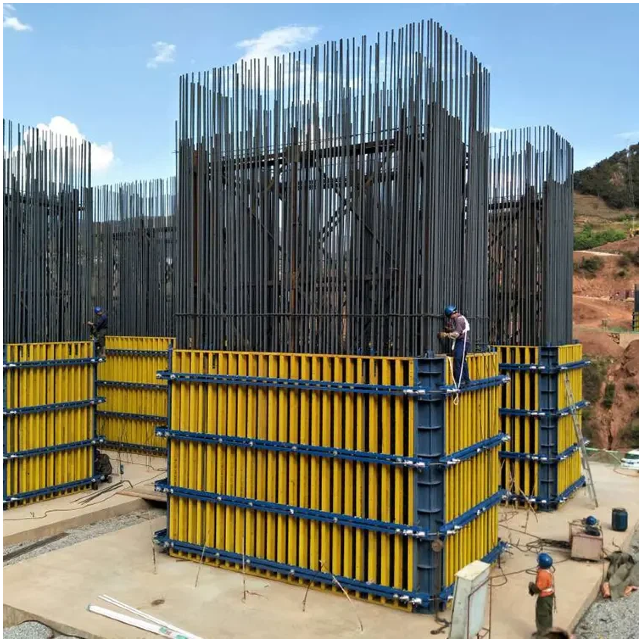
For column formwork, adjustability first means size range coverage. A truly adjustable system should accommodate a wide variety of column widths and depths using the same core components. In H20 timber beam column formwork, this is achieved through modular beams and walers that can be repositioned to form different rectangular or square sections. Instead of treating each column as a special case, crews can reconfigure the same system to match changing dimensions throughout the structure.
Speed of Changeover Between Column Sizes
Adjustment is only valuable if it can be done quickly. On busy sites, long changeover times between column sizes reduce the benefit of reusability. H20 timber beam column formwork is designed so that spacing changes and component repositioning can be carried out with standard site tools and familiar procedures. This allows crews to move from one column size to another within a short time frame, keeping the construction cycle moving.
Consistency of Squareness and Surface Finish
Another key expectation of adjustability is that accuracy does not suffer as dimensions change. Column corners must remain square, and concrete surfaces should stay consistent even when the formwork layout is modified. A well-designed adjustable system maintains geometric control across different configurations, ensuring that flexibility does not come at the expense of finish quality.
The Adjustment “Levers” in H20 Timber Beam Column System
Understanding how adjustment actually happens requires a closer look at the components and their roles within the system.
Changing the Spacing Between H20 Beams and Walers
One of the main adjustment mechanisms in H20 timber beam column formwork is the ability to change the spacing and layout between H20 timber beams and steel walers. By increasing or decreasing this spacing, the system can be adapted to different column widths while still providing sufficient stiffness to resist fresh concrete pressure. This spacing control allows the same beams and walers to serve multiple configurations instead of being locked into a single dimension.
Using Modular Walers and Frames for Different Cross-Sections
Modular steel walers play a central role in shaping the column. Their standardized profiles allow them to be combined in different arrangements to match various cross-sections. When column dimensions change, walers can be repositioned or replaced with different lengths while keeping the rest of the system unchanged. This modular approach is especially useful in projects where column sizes vary floor by floor.
Positioning Clamps Along Walers for Site Flexibility
Clamps that connect H20 timber beams to walers can be positioned at required locations along the waler length. This site-position flexibility means that crews are not constrained by pre-fixed connection points. Instead, they can place clamps exactly where structural demand and geometry require them. This capability supports both dimensional adjustment and pressure management without introducing unnecessary complexity.
What Adjustments Change Structurally and What They Don’t
A common concern among engineers is whether frequent adjustment alters the structural behavior of the formwork system. Understanding what changes and what remains constant helps address this concern.
Load Path Remains Consistent
Regardless of column size, the fundamental load path in an H20 timber beam column formwork system remains the same. Fresh concrete pressure is transferred from the formwork facing into the H20 beams, then into the steel walers, and finally into ties, braces, and supports. Adjusting spacing does not change this load path; it simply modifies how stiffness is distributed within it.
Spacing Changes Stiffness, Not the Basic Concept
When spacing between beams and walers is adjusted, the stiffness of the system changes to suit the new geometry. Tighter spacing increases stiffness for larger or higher-pressure columns, while wider spacing may be acceptable for smaller sections. This controlled adjustment allows the system to remain efficient without being overbuilt for every situation.
When Additional Ties or Diagonal Braces Are Required
Adjustment does not eliminate the need for sound structural judgment. For very large columns or high-pressure pours, additional ties or diagonal braces may still be required. The advantage of an adjustable system is that these additions can be integrated easily without redesigning the entire formwork setup.
Adjustment Versus Concrete Finish Quality
Flexibility is valuable only if it does not compromise the visual and dimensional quality of the finished column.
Squareness Control at Column Corners
Column corners are often the first area where quality issues appear. In an adjustable H20 timber beam column system, corner alignment is controlled through precise positioning of beams and walers. Because the components are modular and repeatable, crews can maintain accurate right angles even when column sizes change frequently.
Preventing Bulging Lines and Joint Marks
Bulging and joint marks typically result from uneven pressure distribution or poorly aligned panels. Adjustable spacing allows the system to be tuned so that pressure is evenly resisted across the column surface. This helps maintain smooth faces and reduces the likelihood of visible defects after stripping.
Repeatability Reduces On-Site Variability
One major benefit of modular adjustability is repeatability. When the same components are reused in different configurations, crews become familiar with their behavior. This familiarity reduces “craft randomness” and leads to more consistent results across the project, even as column sizes vary.
Typical Column Scenarios Where Adjustability Pays Off
Not all projects benefit equally from adjustable column formwork. Certain scenarios make the value particularly clear.
Parking Basements With Multiple Column Sizes
Parking structures often feature a wide range of column dimensions to accommodate ramps, loads, and layout changes. An adjustable H20 timber beam column formwork system allows these variations to be handled with one core setup instead of multiple dedicated molds.
Podium and Transfer Levels
Podium levels frequently introduce transfer columns with different sizes and reinforcement details. Adjustability makes it possible to handle these changes without interrupting the construction rhythm or increasing inventory complexity.
Industrial Buildings With Repetitive Grids
Even in industrial projects with repetitive grids, slight variations in column dimensions can occur due to equipment loads or design changes. An adjustable system provides the flexibility to accommodate these variations while maintaining a consistent workflow.
On-Site Workflow for Fast Size Changeovers
Adjustment is most effective when supported by a clear site workflow.
Pre-Assembly Strategies
Pre-assembling standard beam and waler modules in staging areas can significantly reduce changeover time. When a new column size is required, crews can swap modules rather than rebuilding from scratch.
Marking Repeat Positions
Marking commonly used clamp and beam positions helps crews reproduce configurations quickly. This practice reduces measuring time and improves consistency across similar columns.
One Crew and One Crane Philosophy
Efficient adjustment is often achieved with a single crew and coordinated crane use. Minimizing idle time between dismantling and reassembly helps keep the project schedule on track.
Column Size Changeover Planning Table
What needs to change | Adjustment method | Why it matters | Time impact |
Column width/depth | Adjust beam and waler spacing | Ensures proper fit and stiffness | Quick to medium |
Column height | Reconfigure panel arrangement | Supports pour planning and access | Medium |
Tie strategy | Change tie locations or quantity | Maintains pressure safety | Medium |
Corners | Adjust corner alignment setup | Preserves squareness | Quick |
This table highlights how targeted adjustments support both flexibility and performance without excessive time loss.
Conclusion
Adjustability in column formwork is not a vague promise but a practical set of controllable decisions about spacing, positioning, and configuration. When applied correctly, one system can serve many column sizes while maintaining stable load resistance and consistent concrete finish. Lianggong designs its column solutions so that flexibility and structural reliability work together rather than compete. By using modular beams, walers, and adjustable connection points, projects can respond to changing column schedules without losing efficiency. If your project involves varying column dimensions and demanding timelines, the timber beam column system offered by Lianggong provides a proven and adaptable approach. Contact us to share your column drawings and schedules, and our technical team will help configure a solution that supports fast changeovers and reliable performance.
FAQ
How many different column sizes can one H20 timber beam column formwork set handle?
A single set can cover a wide range of rectangular or square column sizes by adjusting beam spacing, waler positions, and tie layouts.
Does adjusting the system reduce its load capacity?
No. The load path remains the same. Adjustments mainly change stiffness distribution, and additional ties or diagonal braces can be added if required.
Will frequent adjustment affect concrete surface quality?
When assembled correctly, adjustability does not reduce finish quality. Modular components help maintain squareness and smooth surfaces.
Is adjustable column formwork suitable for fast-paced projects?
Yes. With proper planning and pre-assembly, adjustable systems support quick size changeovers and help maintain a steady construction cycle.

 한국어
한국어 Tiếng Việt
 Bahasa Melayu
 Filipino
 Bahasa Indonesia
 العربية
 Français
 Русский
 Español
 Português
 English
 Deutsch
 italiano
 日本語
日本語 Nederlands
 ไทย
ไทย Polski
 Türkçe
 አማርኛ
አማርኛ ພາສາລາວ
 ភាសាខ្មែរ
 ဗမာစာ
ဗမာစာ தமிழ்
தமிழ் magyar
 Română
 Čeština
 Монгол
 қазақ
қазақ Српски
 हिन्दी
 فارسی
فارسی Kiswahili
 Slovenčina
 Slovenščina
 Norsk
Norsk Svenska
 українська
 Ελληνικά
 Suomi
Suomi Հայերեն
 עברית
עברית Latine
 Dansk
Dansk اردو
اردو Shqip
Shqip বাংলা
বাংলা Hrvatski
 Afrikaans
 Gaeilge
 Eesti keel
 Māori
Māori नेपाली
 latviešu
 অসমীয়া
 Беларуская мова
 Български
 डोग्रिड ने दी
 Esperanto
 Eʋegbe
 íslenska
 Türkmençe