On large construction sites, time is rarely lost because concrete takes too long to set. Delays usually happen when crews dismantle systems that could have been lifted as complete units, or when repeated assembly and adjustment slow down the slab cycle floor after floor. This is why table formwork has become a common discussion point on high-rise and large-area projects. For teams already familiar with H20 Timber Beam Formwork. The key question is not whether table formwork works, but how much time it can realistically save on large sites and under what conditions that time saving is maximized. This article explains the turnover logic behind table formwork, the site conditions that determine its real efficiency, and where the expected time savings actually come from when used on large, repetitive slab areas.
What Table Formwork Is and What It Really Means on Site
Table formwork is often described in a single sentence, but its real value becomes clear only when you look at how it changes daily site operations.
Pre-Assembled Table Units for Slab Pouring
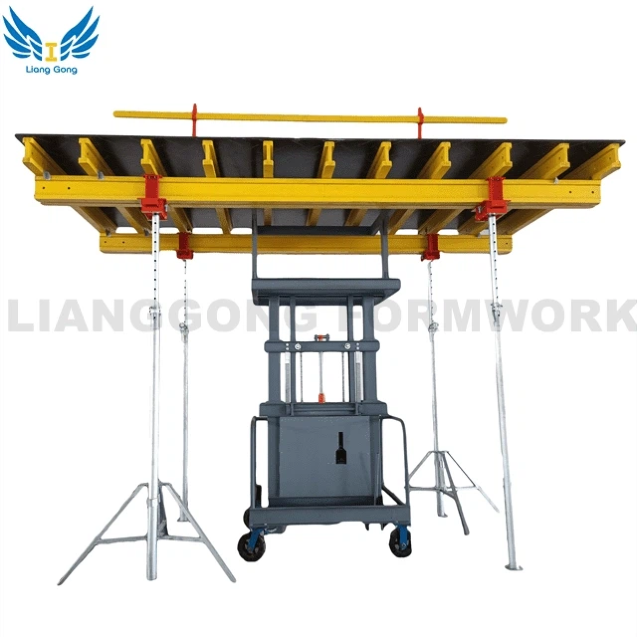
At its core, table formwork consists of large, pre-assembled slab units made up of H20 timber beams, plywood, formwork panels, and steel props. These units are assembled once and then treated as complete working platforms rather than as loose components. Instead of building the slab formwork from individual beams and props on every floor, crews work with tables that already maintain their geometry and alignment.
“Move It Up and Reuse It” Instead of Dismantling
The defining characteristic of table formwork is that it is moved as a whole. After a slab is poured and gains sufficient strength, the table units are lowered, repositioned, and lifted to the next level without being dismantled. This reuse without full disassembly is the foundation of its time-saving potential. By avoiding repeated assembly, table formwork changes the slab cycle from a construction task into a relocation task.
Why Large Sites Benefit More Than Small Sites
Table formwork can be used on many types of projects, but its advantages become much more visible as site scale increases.
Repetition Multiplies Time Savings
On large sites with many similar floors, repetition works in favor of table formwork. Each time a table is reused, the initial assembly effort is amortized. On projects with dozens of identical or near-identical slabs, the time saved per floor accumulates into a significant reduction in overall schedule.
Crane Lifts Replace Manual Handling
Large sites typically have crane capacity designed for repetitive lifting operations. Table formwork takes advantage of this by replacing manual handling and on-site fitting with planned crane lifts. Instead of moving hundreds of individual components, crews relocate complete table units in a single lift. This reduces physical handling time and streamlines coordination between trades.
Fewer Fittings Mean Fewer Mistakes
Large crews working under pressure are more likely to make mistakes when dealing with many small fittings and connections. Table formwork minimizes the number of individual parts that need to be adjusted on each floor. With fewer connections to check and fewer adjustments to make, the risk of errors decreases and productivity becomes more predictable.
Where the Time Savings Actually Come From
Time savings with table formwork do not come from one dramatic improvement but from steady reductions across several stages of the slab cycle.
Less Assembly and Adjustment on Each Floor
Traditional slab formwork requires crews to assemble beams, panels, and props on every level. Even experienced teams spend considerable time aligning and adjusting components. Table formwork eliminates most of this work. Once the tables are assembled and calibrated, each new floor requires only minor adjustments rather than a full rebuild. This reduction in repetitive assembly is one of the biggest contributors to faster cycles.
Faster Stripping and Repositioning
Stripping slab formwork is often as time-consuming as assembly. With table formwork, stripping becomes a controlled operation. Tables are lowered slightly, released from the slab, and prepared for lifting. Repositioning is planned as part of the lifting sequence, which avoids the congestion and confusion that often occur when many workers strip individual components at the same time.
Cleaner Workflow for Large Crews
Large sites involve multiple crews working in parallel. Table formwork supports a cleaner workflow by clearly separating tasks such as lifting, positioning, and final adjustments. When each crew knows its role in the sequence, idle time is reduced and coordination improves. This structured workflow is especially valuable on projects with tight schedules.
The Conditions That Decide Your Real Time Savings
Slab Size and Regular Geometry
Large, open floor plates with regular geometry are ideal for table formwork. Wide slab areas allow tables to be sized efficiently and reused without frequent modification. When slab edges and openings remain consistent, tables can be moved quickly with minimal adjustment. Irregular layouts do not eliminate the benefits, but they may require hybrid solutions where table formwork is combined with other systems at edges or around cores.
Available Crane Time and Lifting Plan
Crane availability is a critical factor. Table formwork relies on planned lifting operations, so crane schedules must support regular table movements. On sites where crane time is limited or frequently interrupted, the time-saving effect may be reduced. Proper lifting plans help ensure that table movements fit smoothly into the overall construction sequence.
Clear Height Limits and Shoring Layout
Clear height affects table size and shoring configuration. Table formwork performs best when clear heights allow tables to be moved without excessive reconfiguration. Proper planning of shoring layout ensures that tables can be lowered, moved, and reset efficiently without interfering with other structural elements.
Typical Large-Site Use Cases for Table Formwork
Certain project types consistently show strong results with table formwork.
High-Rise Residential Towers
High-rise residential buildings often feature repetitive slab layouts over many floors. Table formwork fits well in this environment, enabling fast and consistent slab cycles that support aggressive construction schedules.
Multi-Level Factories and Industrial Buildings
Industrial buildings frequently require large, open slab areas to support equipment and production lines. Table formwork allows these slabs to be constructed efficiently while maintaining consistent quality across levels.
Underground Structures With Large Slab Areas
Basements, parking structures, and underground facilities often include wide slab areas with repetitive geometry. Table formwork simplifies construction in these spaces by reducing manual handling and speeding up turnover between pours.
A Quick Estimation Method for Managers
Estimating time savings does not require complex calculations. A few practical comparisons can provide useful insight.
Compare Touches Per Square Meter
One effective method is to compare how many times materials are handled per square meter of slab. Traditional systems involve multiple touches during assembly, adjustment, and stripping. Table formwork reduces these touches by moving large units instead of individual components.
Compare Assembly Hours Per Cycle
Looking at assembly hours per cycle highlights differences between systems. Table formwork typically shows lower assembly hours after the initial setup, as most work shifts from assembly to repositioning.
Convert Saved Hours Into Saved Days
Once labor hours are known, converting them into days using actual crew sizes provides a clear picture of schedule impact. Even modest savings per floor can translate into significant time reductions over many cycles.
Large-Site Time Savings Estimator for Table Formwork
Site condition | What it usually looks like | Table formwork impact | Expected time benefit direction |
Large floor plate | Wide open slab areas | Fewer resets and adjustments | High |
Repetitive floors | Similar geometry across levels | Tables reused many times | Very high |
Limited crane slots | Crane is a shared bottleneck | Benefit may be reduced | Medium to low |
Irregular edges | Many cut-outs and changes | Hybrid zones required | Medium |
This table shows that table formwork delivers the strongest time savings when site conditions align with its turnover logic.
Conclusion
On large sites with repetitive slab geometry, table formwork saves time primarily by minimizing dismantling and repeated assembly. By turning slab construction into a process of planned relocation rather than continuous rebuilding, it shortens cycle times and improves workflow stability. For projects using H20 Timber Beam Formwork, table systems offered by Lianggong build on the same modular principles while scaling them up for large-area efficiency. When floor plates are wide, repetition is high, and crane logistics are well planned, the time savings can be substantial. If you want to evaluate how a table slab formwork system could improve turnover on your project, contact us with your floor plate size and cycle targets. Lianggong’s technical team can propose table sizes, lifting plans, and hybrid solutions tailored to your site conditions.
FAQ
How much time can table formwork save on large sites?
Savings vary by project, but on repetitive large slabs, table formwork can significantly reduce assembly and stripping time on every floor.
Does table formwork always require a crane?
Yes, crane lifting is typically used to move table units, which is why crane planning is important for achieving maximum efficiency.
Can table formwork handle irregular slab edges?
Yes, but irregular edges often require hybrid zones where table formwork is combined with other slab systems.
Is table formwork suitable for underground construction?
It is well suited for underground structures with large slab areas, such as basements and parking facilities, where repetition and open layouts are common.

 한국어
한국어 Tiếng Việt
 Bahasa Melayu
 Filipino
 Bahasa Indonesia
 العربية
 Français
 Русский
 Español
 Português
 English
 Deutsch
 italiano
 日本語
日本語 Nederlands
 ไทย
ไทย Polski
 Türkçe
 አማርኛ
አማርኛ ພາສາລາວ
 ភាសាខ្មែរ
 ဗမာစာ
ဗမာစာ தமிழ்
தமிழ் magyar
 Română
 Čeština
 Монгол
 қазақ
қазақ Српски
 हिन्दी
 فارسی
فارسی Kiswahili
 Slovenčina
 Slovenščina
 Norsk
Norsk Svenska
 українська
 Ελληνικά
 Suomi
Suomi Հայերեն
 עברית
עברית Latine
 Dansk
Dansk اردو
اردو Shqip
Shqip বাংলা
বাংলা Hrvatski
 Afrikaans
 Gaeilge
 Eesti keel
 Māori
Māori नेपाली
 latviešu
 অসমীয়া
 Беларуская мова
 Български
 डोग्रिड ने दी
 Esperanto
 Eʋegbe
 íslenska
 Türkmençe